
Every July, the disability community — and the people who love, raise, teach, and support disabled individuals — observes Disability Pride Month. For our team, this month carries particular meaning. We work every day alongside children with autism, cerebral palsy, Down syndrome, sensory processing differences, feeding disorders, motor delays, communication differences, and so many other conditions that make each child uniquely themselves. Disability Pride Month is a moment to pause, reflect, and celebrate — and to share why this perspective shapes the way we practice therapy.
WHAT IS DISABILITY PRIDE?
Disability Pride Month has its roots in the passage of the Americans with Disabilities Act (ADA) on July 26, 1990 — one of the most significant pieces of civil rights legislation in American history. The ADA prohibited discrimination against people with disabilities in employment, public accommodations, transportation, and government services. Its passage was the result of decades of organizing, advocacy, and courage by disabled activists who demanded that their lives be treated as equally valuable.
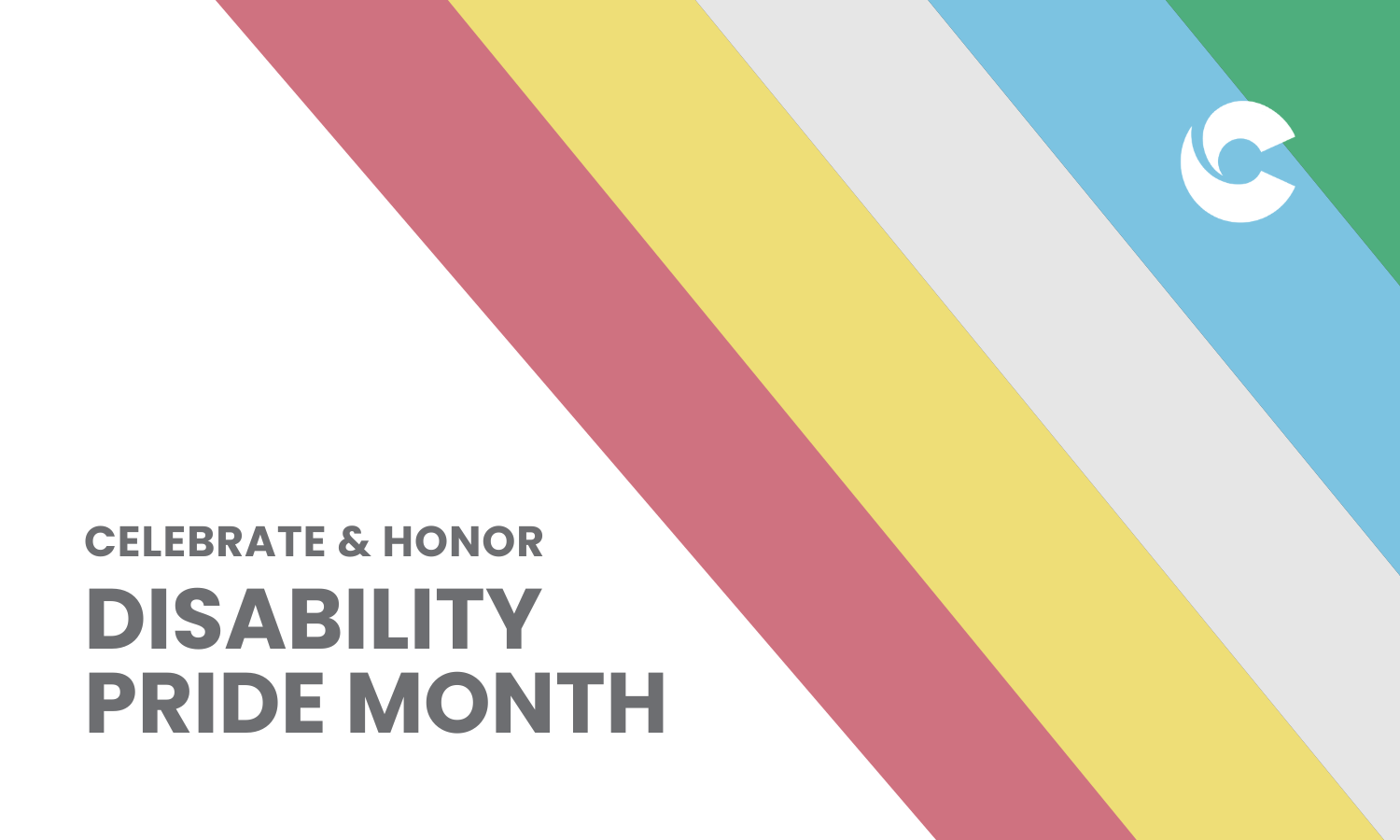
Disability Pride Month honors that history and continues the work of affirming that disability is not something to be ashamed of, fixed, or hidden. It is a part of human diversity — one that brings with it distinct perspectives, creativity, resilience, and community. The disability pride flag, redesigned in 2021, features five colored stripes representing different disability experiences, set against a black background that honors those lost to ableism, neglect, and violence.
NAVIGATING DISABILITY PRIDE MONTH FOR FAMILIES WITH DISABLED CHILDREN
For families with disabled children, Disability Pride Month can be a complex experience. Many parents are still coming to terms with their child’s diagnosis, while others feel overwhelmed by the intricate systems they must navigate—such as insurance, schools, therapies, and specialists. It’s common to carry both grief and love simultaneously, and those feelings deserve recognition.
Understanding Disability Frameworks
There are two primary frameworks for understanding disability:
-
The Medical Model: This perspective views disability as an individual problem—something that needs to be diagnosed, treated, and cured or minimized.
-
The Social Model: Advocated by the disability rights movement, this model sees disability as a result of societal barriers—such as physical environments, communication systems, and cultural attitudes that do not consider disabled individuals.
Both views have value, and for families in pediatric therapy, they can be hard to balance. We seek therapy to help our children access the world—to talk, move, connect, and learn. This goal is important and loving. It can exist alongside a true celebration of who our children are right now, without waiting for a milestone or a discharge summary.
Embracing Dual Perspectives
The disability community encourages families and professionals to accept both views at the same time: working toward a child’s goals while rejecting the idea that a child’s worth depends on reaching those goals. Disability Pride Month is a chance to practice this balance.
Even though it can be complicated, there is pride in watching how hard children work and what they can overcome. There is pride in how they express themselves in their own way, pride in the community formed with other families who understand, and pride in those small, meaningful moments that others might miss but are very important to your family.
RESOURCES FOR DISABILITY PRIDE MONTH
If you want to learn more or find community this July, here are some starting points:
- The ADA National Network (adata.org) — history, resources, and rights information
- Autistic Self Advocacy Network (autisticadvocacy.org) — disability-led resources for autistic people and families
- Disability-led social media creators and bloggers — search #DisabilityPride
- Your local ADA celebration or Disability Pride parade — many cities across Texas, North Carolina, Washington State, and DC host July events
