
Celebrating Physical Therapists This October
October is National Physical Therapy Month, a nationwide initiative led by the American Physical Therapy Association aimed at increasing awareness of the vital role physical therapists play in health, mobility, and overall quality of life.
For families with young children, physical therapy can be an incredibly transformative service, yet it is often misunderstood. Many parents tend to link physical therapy solely with sports injuries or adult rehabilitation. However, pediatric physical therapy is a specialized field that assists children from infancy through adolescence in developing the movement skills, strength, and confidence necessary for full participation in life.
What Pediatric Physical Therapists Treat
Pediatric physical therapists work with children across a wide spectrum of abilities and needs. Common reasons families seek pediatric physical therapy include:
- Developmental delays in gross motor milestones — not sitting, crawling, standing, or walking on time
- Hypotonia, or low muscle tone, which can affect posture, movement, and endurance
- Cerebral palsy and other neurological conditions that affect motor function
- Torticollis, or tight neck muscles, often identified in infancy
- Toe walking that persists beyond age three
- Coordination and balance difficulties, including developmental coordination disorder
- Spina bifida, muscular dystrophy, and other conditions affecting the musculoskeletal system
- Sports injuries, fractures, and post-surgical rehabilitation
- Gait abnormalities — unusual walking patterns that may cause pain or limit participation
Pediatric physical therapists serve children from their first weeks of life through their teenage years — from the baby with torticollis who cannot turn their head comfortably, to the fourteen-year-old recovering from a sports injury and working to return to their team.
How Pediatric Physical Therapy Differs From Adult Physical Therapy
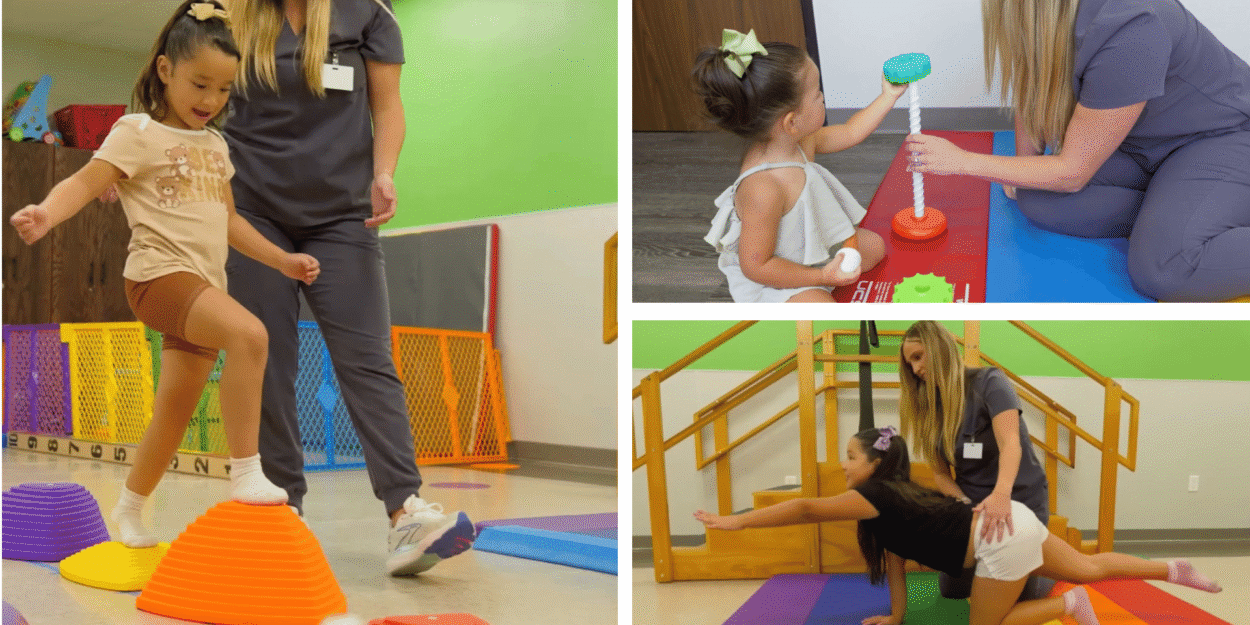
Pediatric physical therapy is not simply a smaller version of adult physical therapy. Pediatric physical therapists undergo specialized training in child development, gaining insights into how children’s bodies function at various growth stages, as well as how they learn, play, and find motivation. Sessions with a pediatric physical therapist resemble playtime rather than traditional gym workouts.
Therapists incorporate various activities such as obstacle courses, climbing structures, balance exercises, ball play, swimming, and games to focus on the specific motor skills a child is developing. The child’s participation and enjoyment are not merely byproducts of the therapy; they are crucial components. When a child is having fun, their nervous system is actively engaged in the learning process.
What Families Are Often Surprised to Learn
1. Early Start for Therapy
Therapy can begin surprisingly early; evaluations can be performed on infants just a few weeks old. Early identification and intervention for motor challenges lead to significantly better outcomes compared to waiting for a child to catch up on their own.
2. Parental Involvement
Physical therapy is not merely a drop-off service; parents play an active role. They learn exercises, handling techniques, and activity modifications that seamlessly fit into the family’s daily routine. A parent who understands their child’s goals and the reasons behind them tends to see the fastest progress.
3. The Element of Fun
Families often arrive with the expectation of a clinical, exercise-focused experience. However, they often leave after witnessing their child joyfully navigate an obstacle course, with the therapist keenly observing each step. At its best, pediatric physical therapy is a joyful experience, and this joy is integral to the process.
Signs Your Child Might Benefit From Physical Therapy
Not every motor challenge requires physical therapy — but some signs are worth discussing with your pediatrician or requesting an evaluation. Consider reaching out if:
- Your child is not meeting gross motor milestones within typical age ranges — not sitting by nine months, not walking by 15 to 18 months
- Your child frequently trips, falls, or bumps into things compared to same-age peers
- Your child avoids physical play, tires quickly during active activities, or complains of pain with movement
- Your child walks on their toes consistently past age three
- Your child has noticeably asymmetrical movement — one side of the body moving differently than the other
- Your child has received a diagnosis — such as cerebral palsy, Down syndrome, or spina bifida — that commonly affects motor development
- Your child is recovering from an injury or surgery and is not progressing as expected
If you are unsure whether your child’s movement patterns are typical, an evaluation is the right first step. A pediatric physical therapist can assess your child’s strength, coordination, flexibility, gait, and developmental motor skills and give you a clear picture of where your child is relative to expected development, and whether intervention would help.
